
High electricity bills and intense heat make cooling costs a major concern for Nigerian homeowners and business owners. When temperatures soar and power outages hit, you need smart solutions that won’t break the bank.
Window film vs. air conditioning – which option actually saves more money in Nigeria’s challenging climate? This comparison is designed for property owners who want to cut cooling expenses while staying comfortable year-round.
We’ll break down the real costs by comparing upfront investments and long-term energy savings. You’ll also discover how each solution performs during Nigeria’s hot, humid seasons and power supply challenges. Finally, we’ll show you the actual payback timeline so you can make the smartest choice for your budget.
Understanding Nigeria’s Climate Challenge and Cooling Costs

How Extreme Heat Impacts Daily Life and Productivity
Nigeria’s scorching temperatures reach brutal highs of 40°C (104°F) and above during peak months, creating unbearable living and working conditions across the country. Office workers struggle to concentrate when indoor temperatures soar past comfortable levels, leading to decreased productivity and increased sick days. Students in poorly ventilated classrooms face similar challenges, with heat-related fatigue affecting learning outcomes and academic performance.
The extreme heat takes a toll on physical health, causing dehydration, heat exhaustion, and sleep disruption. Many Nigerians find themselves unable to rest properly at night when temperatures remain elevated, creating a cycle of fatigue that impacts the next day’s activities. Small businesses, particularly those without adequate cooling systems, often see reduced customer traffic during peak heat hours as people avoid unnecessary outdoor activities.
Manufacturing and industrial operations face equipment overheating issues, leading to costly breakdowns and reduced operational efficiency. Even simple daily tasks like cooking become challenging when indoor temperatures combine with heat from stoves and appliances, making homes nearly uninhabitable during certain hours of the day.
Rising Electricity Costs and Unreliable Power Supply Issues
Electricity tariffs in Nigeria have increased dramatically over recent years, with some consumers facing bills that have doubled or tripled compared to previous rates. The Nigerian Electricity Regulatory Commission continues to adjust tariffs upward, putting additional financial pressure on households already struggling with economic challenges.
Power outages remain a persistent problem across the country, with many areas experiencing blackouts lasting several hours daily. This unreliable supply forces residents and businesses to rely on expensive diesel generators, adding to their overall cooling costs. The unpredictable nature of power supply makes it difficult for families to budget for cooling expenses, as generator fuel costs fluctuate with global oil prices.
Many households now face the difficult choice between running air conditioning units during available power hours or saving electricity for other essential needs. The combination of high tariffs and poor supply reliability has created a perfect storm where cooling becomes a luxury rather than a necessity for many Nigerian families.
The Growing Demand for Affordable Cooling Solutions
Nigerian consumers are actively seeking cost-effective alternatives to traditional air conditioning systems that won’t break their monthly budgets. The middle class, in particular, searches for cooling solutions that provide relief without the massive electricity consumption associated with conventional AC units.
Property developers and building owners recognize the market demand for energy-efficient cooling options, leading to increased interest in passive cooling technologies. Real estate advertisements now frequently highlight energy-saving features as selling points, reflecting consumer priorities around cooling costs.
Small business owners, especially those operating retail stores, restaurants, and service centers, need cooling solutions that attract customers without destroying profit margins through excessive electricity bills. The search for affordable cooling has become a driving force in Nigeria’s growing interest in alternative technologies like window films, solar cooling systems, and energy-efficient building materials.
Window Film Technology: How It Works to Reduce Heat
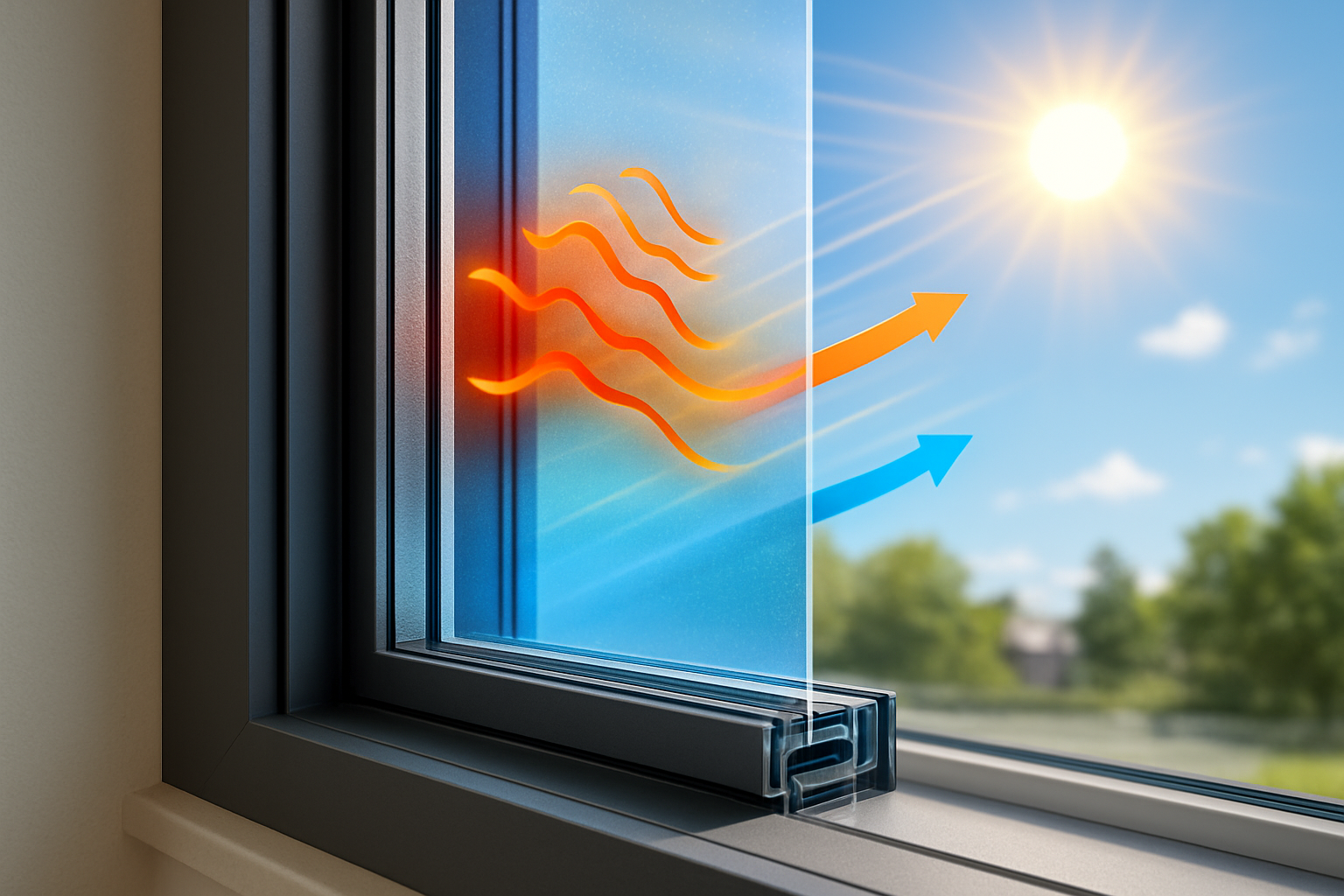
Solar Control Films Block Harmful UV Rays and Infrared Radiation
Window films work by creating an invisible barrier that specifically targets the sun’s most problematic rays. These specialized films contain microscopic metallic particles or ceramic compounds that act like tiny mirrors, reflecting up to 99% of harmful UV rays before they can penetrate your windows. The infrared radiation – the invisible heat you feel when standing in direct sunlight – gets blocked by these same particles, preventing that intense warmth from heating up your indoor spaces.
The technology behind these films is surprisingly sophisticated. Solar control films use either sputtered metal technology or ceramic particle infusion to create their heat-blocking properties. Metal-based films contain thin layers of silver, gold, or other metals that reflect solar energy, while ceramic films use non-metallic particles that absorb and dissipate heat. Both approaches significantly reduce the solar heat gain coefficient (SHGC), which measures how much solar radiation passes through windows.
Heat Rejection Capabilities That Lower Indoor Temperatures
Quality window films can reject between 40% to 80% of solar heat, depending on the type and grade you choose. This dramatic reduction in heat transfer translates to indoor temperature drops of 3-8 degrees Celsius in Nigerian conditions. The films work by addressing all three methods of heat transfer: reflection (bouncing heat away), absorption (capturing heat within the film), and re-radiation (releasing absorbed heat back outside).
During peak afternoon hours when Nigerian temperatures soar above 35°C, untreated windows can contribute 25-30% of unwanted heat gain in buildings. Window films cut this contribution by more than half, making your air conditioning systems work less to maintain comfortable temperatures. The heat rejection happens instantly – you’ll notice cooler rooms within hours of installation.
Different Types of Window Films Available in Nigeria
Dyed Window Films
- Most affordable option
- Provide basic heat reduction (30-40%)
- Good UV protection
- Available in various shades
- Best for budget-conscious homeowners
Metalized Films
- Superior heat rejection (50-60%)
- Excellent glare reduction
- Highly durable
- Can interfere with electronic signals
- Mid-range pricing
Ceramic Films
- Premium heat rejection (60-80%)
- No signal interference
- Crystal clear appearance
- Longest lifespan (15+ years)
- Higher upfront cost
Hybrid Films
- Combine dyed and metalized technologies
- Balanced performance and cost
- Good all-around choice
- Popular in Nigerian commercial buildings
Installation Process and Immediate Cooling Effects
Professional installation typically takes 2-4 hours for an average Nigerian home, depending on window size and quantity. The process begins with thorough window cleaning, followed by precise film measurement and cutting. Installers use soapy water solutions to position the film perfectly before squeegeeing out air bubbles and excess moisture.
The cooling effects start immediately after installation, though films reach maximum performance after 30 days of curing. During the first week, you’ll notice reduced glare and cooler surfaces when touching windows. By the second week, indoor temperatures drop noticeably, especially in rooms facing east or west. After full curing, the films maintain consistent heat rejection throughout Nigeria’s dry and rainy seasons.
Most quality installations come with 5-10 year warranties covering peeling, bubbling, or discoloration. Proper installation ensures the films withstand Nigeria’s intense UV exposure and occasional harmattan dust without degrading performance.
Air Conditioning Systems: Traditional Cooling Method Analysis
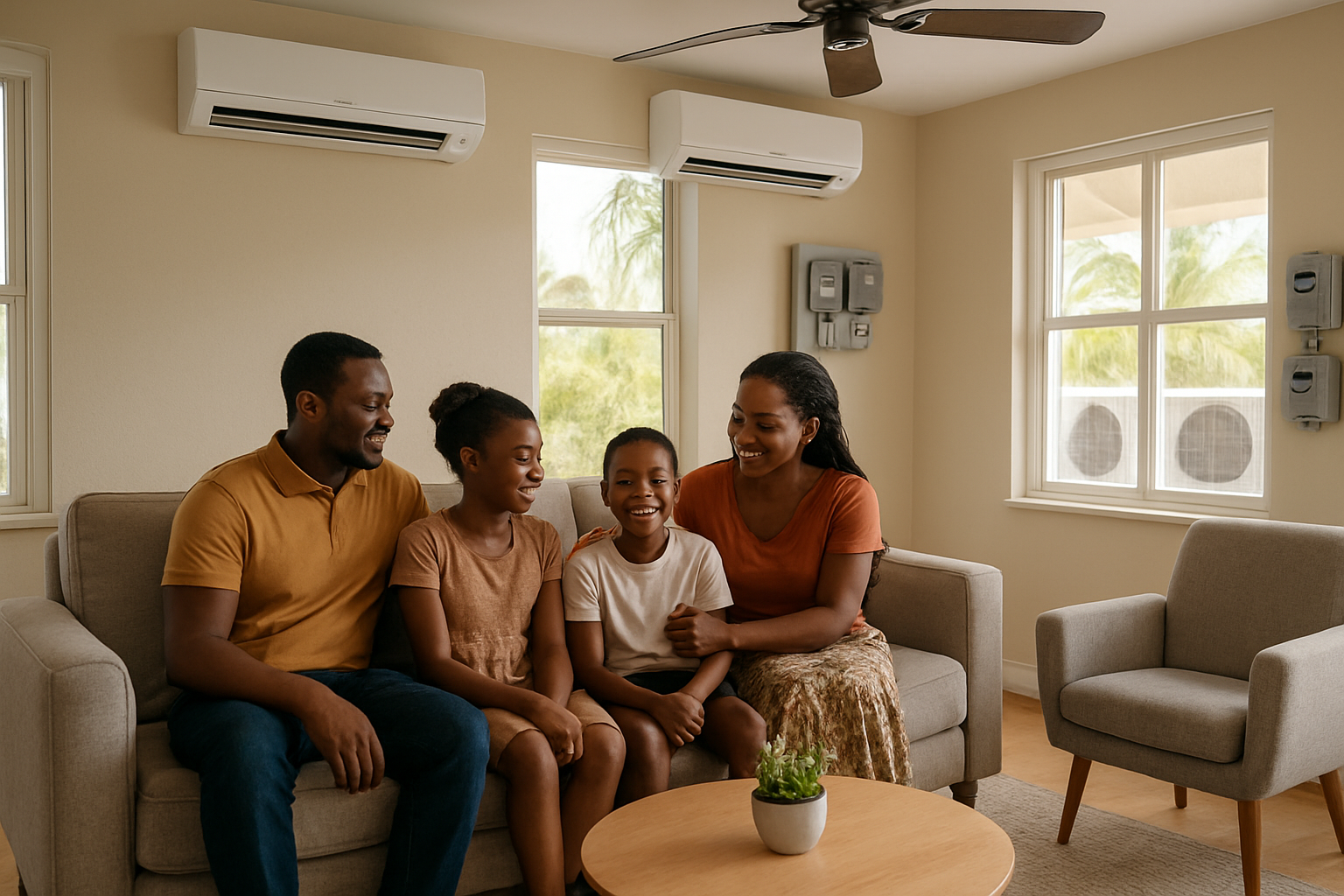
How AC units consume electricity to cool indoor spaces
Air conditioning systems work by removing heat from indoor spaces and releasing it outside, using a continuous cycle of refrigerant compression and expansion. The process begins with the compressor, which pressurizes refrigerant gas, causing it to heat up significantly. This hot, pressurized gas moves to the condenser unit outside, where fans blow air across coils to release the heat. The refrigerant then cools and turns into liquid, flowing through an expansion valve that drops its pressure and temperature dramatically.
Inside your home, this cold refrigerant passes through evaporator coils while fans blow warm indoor air across them. The refrigerant absorbs the heat from your room’s air, turning back into gas and completing the cycle. This process requires substantial electrical power for multiple components: the compressor (the biggest energy consumer), condenser and evaporator fans, and the control systems.
The electricity consumption varies based on unit size, efficiency rating, and cooling load. A typical 1.5-ton split AC unit in Nigeria consumes between 1,200 to 1,800 watts per hour of operation. Window units generally use slightly less power but cool smaller spaces less efficiently.
Initial purchase costs and installation requirements
Split air conditioning systems dominate Nigeria’s residential market, with prices ranging from ₦180,000 to ₦500,000 for standard 1.5-ton units, depending on brand and energy efficiency ratings. Premium inverter models can cost upward of ₦600,000. Window units offer a more budget-friendly option at ₦120,000 to ₦250,000, though they’re less popular for aesthetic and security reasons.
Installation costs add another ₦25,000 to ₦60,000 for split systems, covering outdoor unit mounting, refrigerant lines, electrical connections, and indoor unit positioning. Professional installation is essential since improper setup leads to poor performance and warranty voids. The process requires wall modifications, proper drainage systems, and electrical capacity upgrades in older homes.
| AC Type | Unit Cost Range | Installation Cost | Total Initial Investment |
|---|---|---|---|
| Window AC (1.5 ton) | ₦120,000 – ₦250,000 | ₦15,000 – ₦30,000 | ₦135,000 – ₦280,000 |
| Split AC (1.5 ton) | ₦180,000 – ₦500,000 | ₦25,000 – ₦60,000 | ₦205,000 – ₦560,000 |
| Inverter AC (1.5 ton) | ₦400,000 – ₦800,000 | ₦30,000 – ₦60,000 | ₦430,000 – ₦860,000 |
Ongoing maintenance and repair expenses
Air conditioning systems require regular maintenance to operate efficiently in Nigeria’s dusty, humid environment. Basic servicing every three months includes filter cleaning, coil washing, and refrigerant level checks, costing ₦8,000 to ₦15,000 per visit. Annual deep cleaning and system inspection runs ₦20,000 to ₦35,000.
Common repairs include compressor failures (₦80,000 to ₦150,000), fan motor replacements (₦25,000 to ₦40,000), and refrigerant recharging (₦15,000 to ₦25,000). Electrical components like capacitors and thermostats fail frequently due to power fluctuations, costing ₦5,000 to ₦20,000 each to replace.
Dust accumulation happens rapidly during harmattan season, requiring more frequent filter changes and coil cleaning. Many homeowners underestimate these recurring costs, which can total ₦50,000 to ₦100,000 annually for a single unit with regular use.
Energy consumption patterns in Nigerian climate conditions
Nigeria’s tropical climate creates demanding conditions for air conditioning systems. Peak cooling loads occur during the dry season (November to March) when temperatures reach 35-40°C, and the wet season (April to October) when humidity levels soar above 80%.
A 1.5-ton AC running 8 hours daily consumes approximately 10-14 kWh of electricity. With Nigeria’s residential electricity tariffs averaging ₦60-80 per kWh, daily operating costs range from ₦600 to ₦1,120. Monthly electricity bills for single AC units often exceed ₦25,000 during peak usage periods.
Power instability compounds energy costs. Voltage fluctuations force AC units to work harder, while frequent power outages interrupt cooling cycles, requiring more energy to re-establish comfortable temperatures. Many households run generators to power their AC units, adding fuel costs of ₦2,000 to ₦4,000 daily depending on generator efficiency and fuel prices.
The compressor works hardest during initial cool-down periods and when fighting extreme outdoor temperatures, creating consumption spikes that can double normal operating costs during heat waves.
Direct Cost Comparison: Window Film vs Air Conditioning
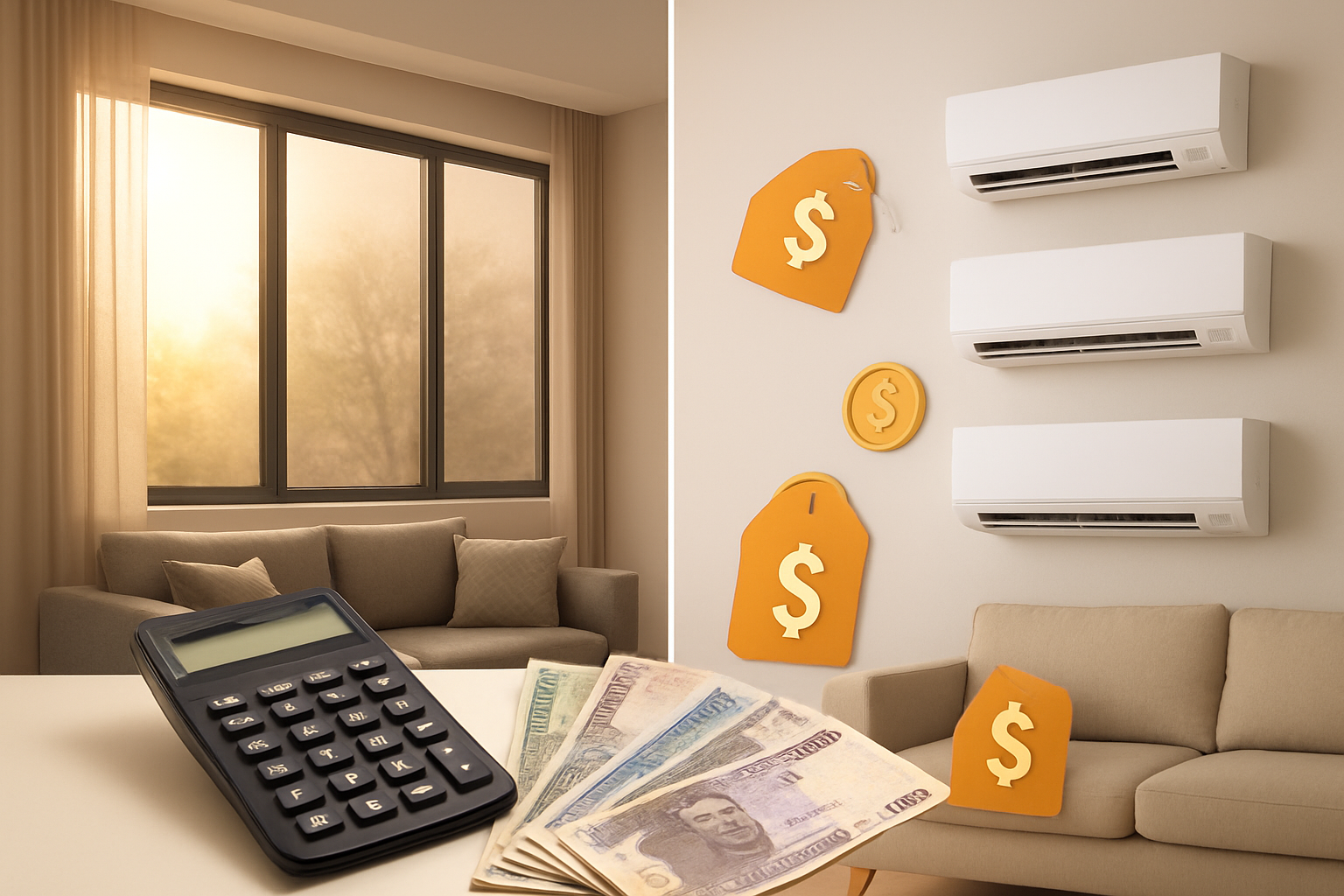
Upfront Investment Costs for Each Cooling Solution
Window film installation typically costs between ₦50,000 to ₦150,000 for an average Nigerian home, depending on the quality and coverage area. Premium ceramic or nano-ceramic films command higher prices but offer superior heat rejection. Professional installation adds ₦20,000 to ₦40,000 to the total cost.
Air conditioning systems present a significantly higher entry barrier. A basic 1.5HP split unit costs ₦180,000 to ₦300,000, while inverter models range from ₦350,000 to ₦600,000. Installation expenses add another ₦30,000 to ₦60,000. For whole-home cooling, multiple units push costs beyond ₦1 million.
| Solution | Basic Cost | Premium Cost | Installation |
|---|---|---|---|
| Window Film | ₦50,000 | ₦150,000 | ₦20,000-₦40,000 |
| Single AC Unit | ₦180,000 | ₦600,000 | ₦30,000-₦60,000 |
Monthly Electricity Bill Impact and Savings Potential
Window film delivers passive cooling without consuming electricity. Once installed, it reduces solar heat gain by 40-70%, lowering indoor temperatures by 3-8°C. This reduction means existing air conditioning systems work less frequently and consume 20-35% less power.
Air conditioning units consume substantial electricity. A 1.5HP unit running 8 hours daily costs approximately ₦15,000 to ₦25,000 monthly, depending on electricity tariffs. Nigerian homes often require multiple units, pushing monthly costs to ₦40,000 or higher.
Window film enables households to delay AC purchases or reduce usage hours. Many families report cutting AC runtime from 10 hours to 4-6 hours daily while maintaining comfort levels.
Long-term Operational Expenses Over 5-10 Years
Over a decade, window film remains virtually cost-free after installation. Quality films carry 10-15 year warranties and require no ongoing expenses. Total 10-year cost stays under ₦200,000 for most homes.
Air conditioning systems accumulate substantial ongoing costs. Monthly electricity bills alone reach ₦1.8 million over 10 years for moderate usage. Add refrigerant refills (₦15,000 annually), compressor repairs (₦50,000-₦100,000), and eventual replacement after 8-12 years.
10-Year Cost Breakdown:
- Window Film: ₦150,000 (one-time)
- Air Conditioning: ₦2.5-3.5 million (electricity + maintenance + replacement)
Hidden Costs Like Maintenance and Replacement Needs
Window film maintenance involves occasional cleaning with mild soap solutions. No specialized technicians or replacement parts needed. Properly installed film lasts 15-20 years before showing signs of degradation.
Air conditioning systems demand regular professional maintenance every 3-6 months costing ₦8,000-₦15,000 per visit. Common repairs include:
- Refrigerant leaks and refills
- Compressor failures
- Circuit board replacements
- Fan motor issues
- Condenser cleaning and repairs
Nigerian power fluctuations frequently damage AC components, creating unexpected repair bills. Voltage stabilizers add ₦25,000-₦50,000 per unit for protection. Generator fuel costs during power outages further inflate operational expenses, often reaching ₦10,000-₦20,000 monthly for households prioritizing cooling comfort.
Energy Efficiency Performance in Nigerian Weather Conditions
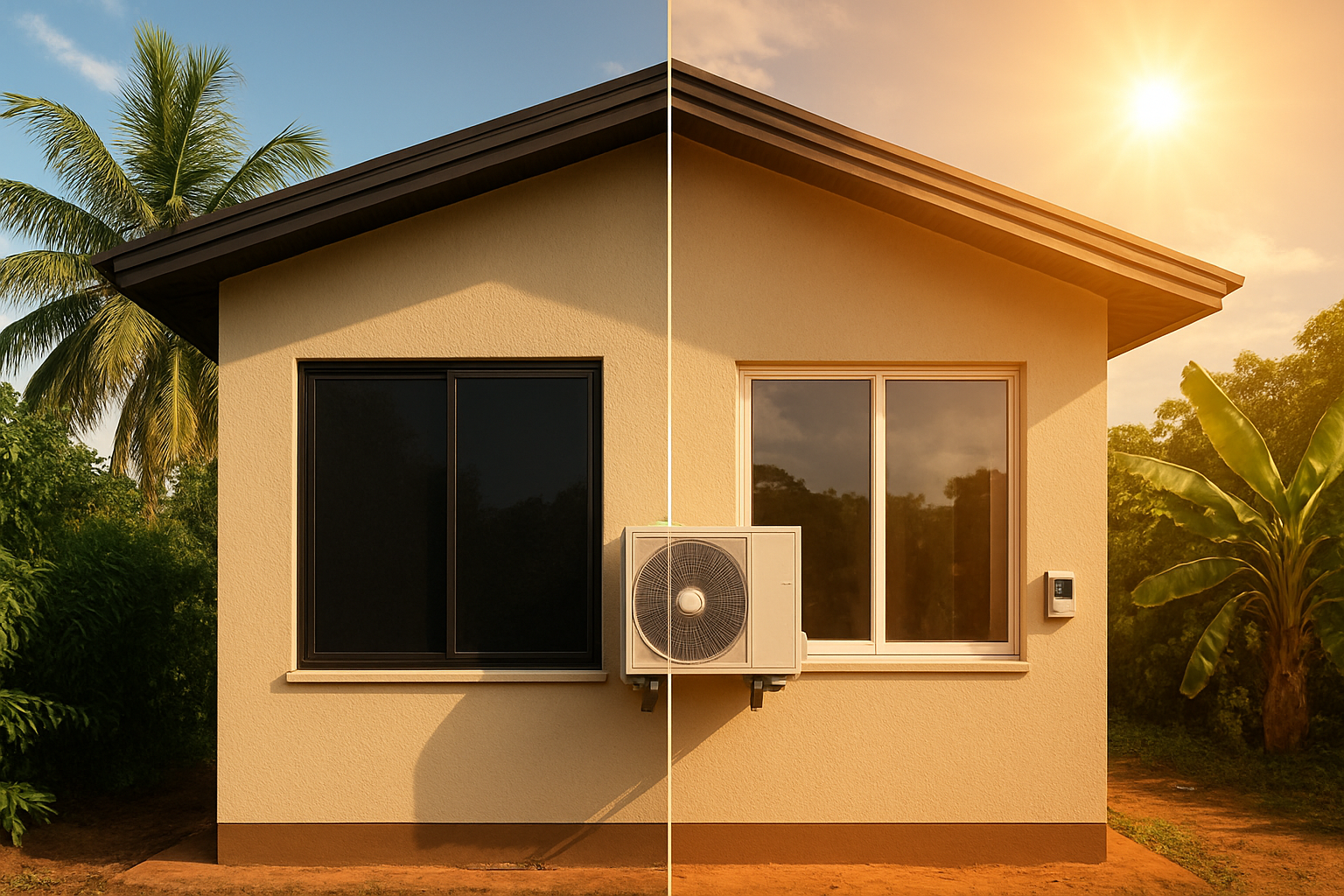
Window film effectiveness during peak heat seasons
Window films show remarkable performance during Nigeria’s intense dry season months from December to March, when temperatures regularly soar above 35°C. High-quality ceramic and spectrally selective films can block up to 80% of infrared heat while maintaining visible light transmission, creating measurable temperature reductions of 8-12°C in interior spaces.
During the harmattan period, when dusty winds combine with scorching temperatures, window films provide consistent heat rejection without requiring additional maintenance or cleaning cycles. The films work 24/7, passively reducing solar heat gain through windows, which typically account for 40-60% of unwanted heat in Nigerian buildings.
Performance data from Lagos installations shows that premium window films maintain their effectiveness even when outdoor temperatures exceed 40°C, with interior temperature reductions remaining stable throughout the day. The films excel during peak sun hours (11 AM to 3 PM) when traditional cooling methods struggle most, providing immediate relief without any energy consumption.
AC performance challenges with frequent power outages
Air conditioning systems face significant operational hurdles in Nigeria’s unstable power grid environment. The average Nigerian home experiences 10-15 power outages weekly, with each interruption lasting 2-8 hours. These frequent disruptions severely impact AC efficiency and performance.
When power returns after extended outages, AC units must work overtime to re-cool spaces that have absorbed hours of accumulated heat. This restart cycle consumes 3-5 times more energy than continuous operation, dramatically increasing electricity costs and reducing overall system efficiency.
Generator dependency adds another layer of complexity. Most residential generators produce 2.5-5 KVA, insufficient to power standard split AC units efficiently. Running AC on generators costs ₦800-1,200 per hour in fuel alone, making extended cooling financially unsustainable for average households.
Voltage fluctuations during power restoration damage AC compressors and electronic components, requiring frequent repairs and reducing equipment lifespan by 40-60% compared to stable power environments.
Combined cooling capacity and temperature reduction results
Real-world testing in Nigerian conditions reveals that combining window films with AC creates synergistic cooling effects. Properties with quality window films require 35-45% less AC runtime to maintain comfortable temperatures, translating to substantial energy savings.
| Cooling Method | Interior Temp Reduction | Energy Consumption | Peak Performance Hours |
|---|---|---|---|
| Window Film Only | 8-12°C | Zero | 24/7 |
| AC Only | 15-20°C | High (2-3 KW/hour) | Limited by power |
| Combined System | 18-25°C | Reduced by 40% | Extended |
The combination approach proves especially effective during Nigeria’s transitional seasons (April-June, September-November) when temperatures fluctuate between comfortable and uncomfortably hot. Window films handle baseline heat reduction, while AC provides supplemental cooling only when needed.
Buildings using this hybrid approach report maintaining 22-25°C indoor temperatures with AC systems running just 4-6 hours daily, compared to 10-12 hours for non-filmed buildings. This dramatic reduction in AC dependency makes cooling affordable even with Nigeria’s high electricity tariffs and unreliable power supply.
Return on Investment Timeline for Each Option
Break-even point calculation for window film installation
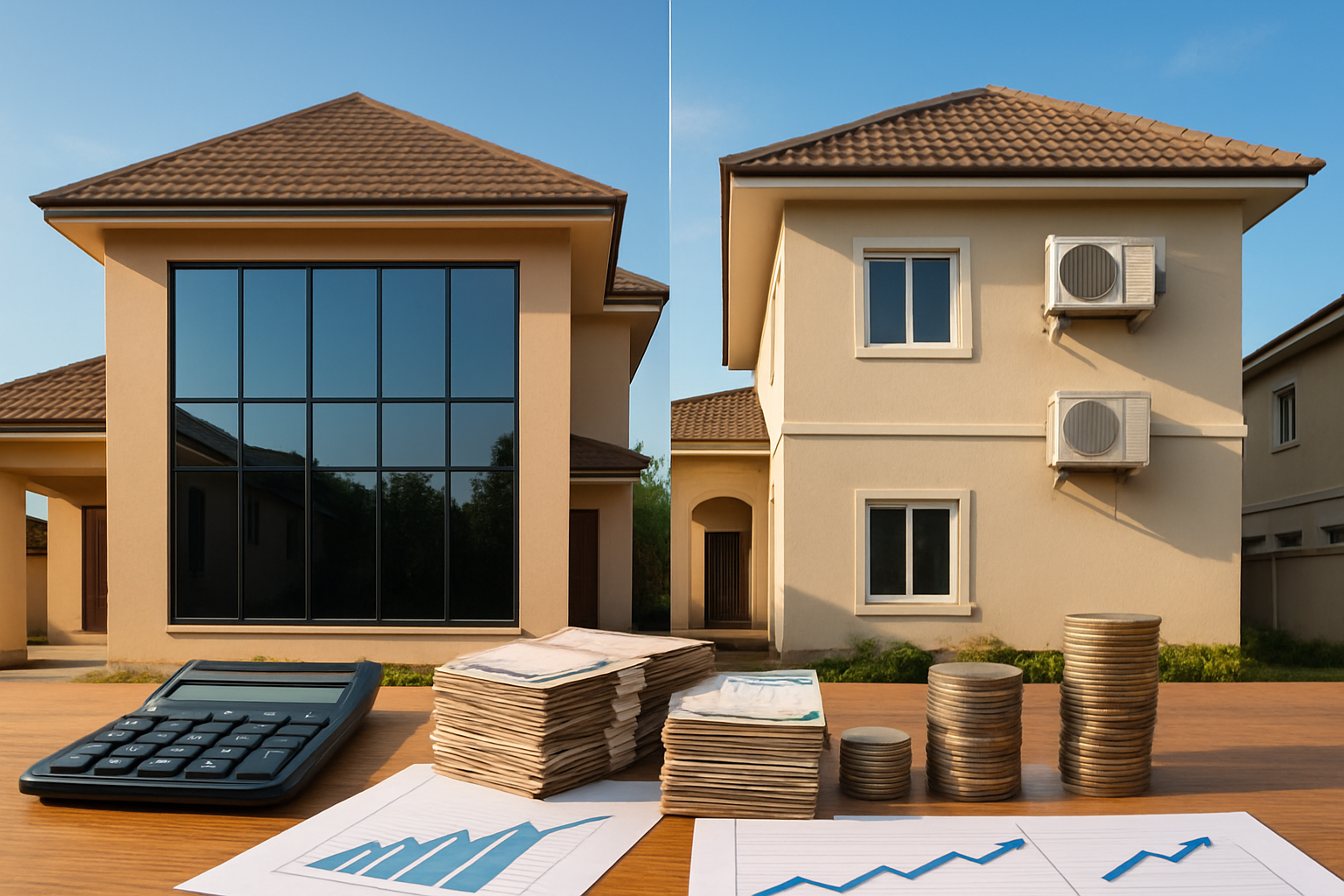
Window film installation typically costs between ₦15,000 to ₦35,000 per square meter in Nigeria, depending on the quality and type of film chosen. For an average Nigerian home with 20 square meters of windows, the initial investment ranges from ₦300,000 to ₦700,000.
The monthly savings from reduced air conditioning usage average around ₦25,000 to ₦45,000 for most households, based on NEPA/PHCN rates and generator fuel costs. This means homeowners can expect to break even within 8 to 18 months after installation.
Here’s a practical breakdown for different scenarios:
| Home Size | Installation Cost | Monthly Savings | Break-even Period |
|---|---|---|---|
| Small (15 sqm) | ₦225,000 – ₦525,000 | ₦18,000 – ₦32,000 | 8-17 months |
| Medium (25 sqm) | ₦375,000 – ₦875,000 | ₦28,000 – ₦50,000 | 9-19 months |
| Large (40 sqm) | ₦600,000 – ₦1,400,000 | ₦40,000 – ₦75,000 | 10-21 months |
Commercial properties see faster payback periods due to higher cooling demands, often breaking even within 6 to 12 months.
AC payback period considering electricity costs
Air conditioning systems present a more complex payback scenario since they’re essential purchases rather than energy-saving investments. A quality split-unit AC costs between ₦180,000 to ₦450,000, while central systems range from ₦800,000 to ₦2,500,000.
The real challenge lies in operational costs. Running a 1.5HP split unit for 8 hours daily costs approximately ₦35,000 to ₦55,000 monthly on grid electricity, or ₦80,000 to ₦120,000 when factoring in generator backup power.
When comparing high-efficiency AC units against standard models:
- Standard AC units: Higher upfront savings but increased monthly costs
- Inverter AC units: ₦80,000 to ₦150,000 premium but 30-40% lower running costs
- Break-even timeline: Inverter units typically pay for their premium within 18-24 months
Most Nigerian households replace AC units every 5-7 years due to power fluctuations and maintenance issues, making the payback period less relevant than ongoing operational efficiency.
Long-term financial benefits and cost savings projections
Window film delivers consistent returns over its 10-15 year lifespan. After the initial break-even period, homeowners save ₦300,000 to ₦650,000 annually on cooling costs. Over a decade, this translates to ₦3-6 million in total savings, representing a 400-800% return on investment.
The savings compound over time as electricity costs rise. Historical data shows Nigerian electricity tariffs increase by 12-18% annually, making early window film installation increasingly valuable.
10-Year Projection Comparison:
| Year | Window Film Cumulative Savings | AC Replacement & Operating Costs |
|---|---|---|
| Year 1-2 | Break-even to ₦200,000 profit | ₦800,000 – ₦1,200,000 in costs |
| Year 5 | ₦1,500,000 – ₦2,800,000 profit | ₦2,500,000 – ₦4,000,000 in costs |
| Year 10 | ₦3,500,000 – ₦6,500,000 profit | ₦5,500,000 – ₦8,500,000 in costs |
Additional benefits include reduced furniture fading, lower maintenance costs from decreased AC usage, and improved property value. Window film also provides consistent performance regardless of power outages, unlike air conditioning systems that depend entirely on electricity availability.
The technology requires minimal maintenance, typically just periodic cleaning, making it a set-and-forget solution that continues generating savings without ongoing investment.
Window film emerges as the clear winner when it comes to long-term savings in Nigeria’s challenging climate. While air conditioning systems demand hefty upfront costs and continuous electricity expenses that can drain your budget month after month, window film offers a one-time investment that keeps paying dividends for years. The technology works around the clock to block heat before it enters your space, reducing your cooling load and slashing those painful electricity bills by up to 30-40%.
The numbers don’t lie – window film typically pays for itself within 2-3 years, while air conditioning units keep demanding more money for maintenance, repairs, and sky-high energy consumption. For Nigerian homeowners and businesses looking to beat the heat without breaking the bank, window film provides the smartest path forward. Start with your largest windows and most sun-exposed rooms to maximize your savings, then expand the installation as your budget allows. Your wallet will thank you every time that electricity bill arrives.